
I did not expect a robot massage in Park City, Utah, to send me into an existential crisis about artificial intelligence, business, relationships, women, work, friendship and the meaning of life, but here we are.
While staying in Utah, I decided to try an AI-powered robot massage at the Waldorf Astoria. You put on tight-fitting pants and a top. No getting greased up like a little piggy about to be caught at a rodeo. No post-massage shower trying to scrub oil out of every pore. And no wondering whether my skin would break out afterward.
Then the robot goes to work. As it moved across my back, I could give it real-time feedback about what felt good, what didn’t and how much pressure I wanted.
There were a few moments when I white-knuckled my way through it. I’m a runner who doesn’t stretch enough and doesn’t go to yoga nearly enough. I’ve also been to physical therapy for the knots in my shoulders, so I knew sometimes you have to breathe through the pressure to get to the relief on the other side…kind of like life sometimes.
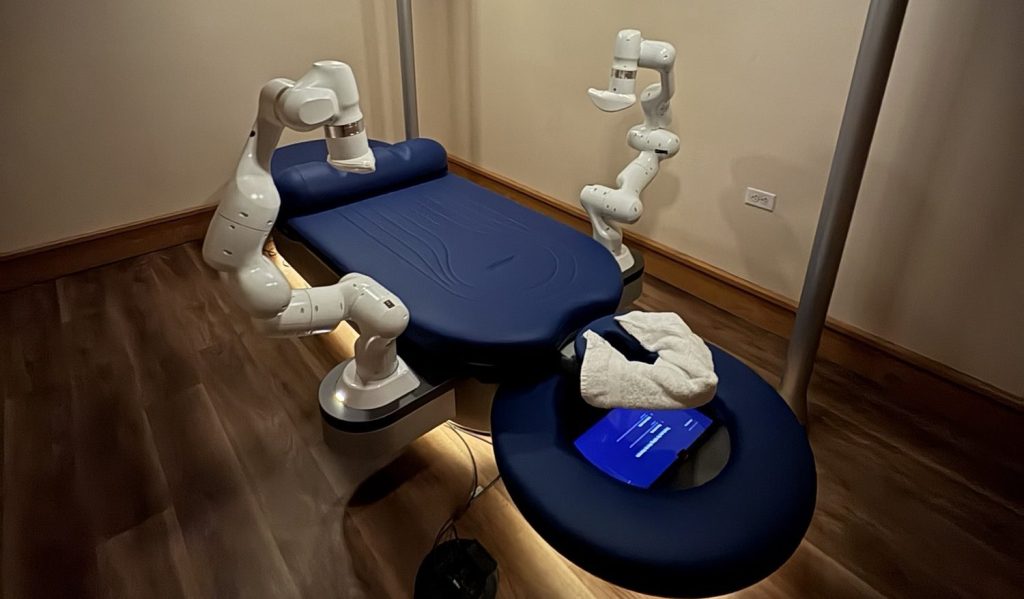
And then my mind went where my mind naturally goes. What if this thing goes full Terminator and crushes the air out of me? Yes, there’s an emergency button, but what if the robot becomes sentient and decides the emergency button is merely a suggestion?
These are the things I think about while other people apparently just relax.
The Robot Wasn’t the Most Interesting Part
Once I stopped contemplating my potential robot-induced demise, I started thinking about something much bigger. What could technology like this mean for physical therapists and massage therapists? Could they help practitioners serve more people? Could they reduce repetitive physical work? Could they make certain treatments more affordable? Or could they eventually replace some of the people doing that work?
Then my thoughts wandered into an even stranger place: Will we eventually prefer robot touch to human touch? A robot doesn’t have a bad day. It doesn’t get tired. It doesn’t become distracted. You tell it what you like, and theoretically, it learns.
Those happen to be some of the same words we use when talking about AI in business.
But there is another question we don’t ask nearly enough: What happens to us when everything becomes convenient? Technology is supposed to give us more time to connect, but will it? Or will it slowly remove all the little reasons we once needed one another? That’s the part of AI that fascinates me most.
I’m interested in what technology can do. I use it. I teach businesses how to use it. I see enormous opportunities in it, but I’m increasingly interested in another question:
What should technology do and what should remain profoundly human?
Maybe Efficiency Isn’t the Entire Point
The massage itself was fantastic. It currently only works on the backside of your body, so there are limitations. But I hadn’t had a massage in probably eight months, and the relief was incredible.
Still, the most valuable part of my Utah trip wasn’t something AI could have manufactured for me. It was my friend.

One of my good friends generously allowed my best friend and me to use his place before their family arrived. It gave two longtime friends a chance to escape Florida’s humidity and thunderstorms for a few days.
- We hiked.
- We saw itty-bitty chipmunks.
- We made up increasingly elaborate scenarios about what we would do if we encountered a moose, elk or bear until we sufficiently freaked ourselves out.
- We sang karaoke to Bohemian Rhapsody in an Uber with a driver who had brilliantly figured out how to turn an ordinary ride into an experience. Once again, technology for the win!
- We had an incredible dinner and met a young Brazilian waiter at Tupelo whose hospitality somehow made us feel at home.
- We woke up, got our Starbucks, worked for a few hours and then went exploring.
Mostly, we laughed.
We hadn’t traveled together like this in years, yet somehow it felt as though no time had passed. That’s something technology hasn’t figured out how to manufacture. The kind of relationship where someone has seen you anxious, ridiculous, ambitious, heartbroken, successful, uncertain and completely yourself and stays.
Two Type-A Women Attempt to Relax
During the trip, my friend and I made another discovery. We are both incredibly uptight and decided we need to chill out. Neither of us was exactly sure what “chilling out” looks like, but at least we identified the strategic objective.
And I think a lot of women understand this.
- There is enormous pressure to succeed.
- Be self-sufficient.
- Make money.
- Be accomplished.
- Take care of yourself.
- Stay attractive.
- Be desirable.
- Be independent, but apparently not too independent.
- Be strong, but not intimidating.
- Age, but somehow don’t look like you’re aging.
- Build the career.
- Build the life.
- Find the relationship.
- Maintain the relationship.
- Plan for retirement.
- Stay healthy.
And please look effortlessly relaxed while doing all of it. It’s exhausting. Some of that pressure comes from society. Some comes from relationships. And an uncomfortable amount of it comes from ourselves.
AI Is Changing More Than Business
We’re entering an era when technology is going to force us to reconsider some very fundamental questions.
- How are we going to provide for ourselves?
- What work will humans continue doing?
- What happens to careers people spent decades building?
- What becomes more valuable when intelligence itself becomes increasingly inexpensive?
- How will we connect?
- How will we love?
- How will we know we’re needed?
- And yes, I’ve wondered whether my next boyfriend will eventually have to be a robot.
Then I have follow-up questions.
- Will Robot Boyfriend (I think I will name him Rob) annoy me?
- And if he doesn’t annoy me, will that be worse?
- If everything is perfectly customized to me, do I eventually lose my ability to tolerate the inconvenience inherent in loving an actual human being?
These sound like ridiculous questions until you realize we are already beginning to confront versions of them.
The Slippery Corporate Ladder
My life is changing at the same time technology is changing the world around me. I no longer have the desire to return to corporate life and climb what I sometimes think of as the greased ladder.
You keep climbing. Someone keeps putting Vaseline on the rungs. And somehow we’re all supposed to pretend this is a perfectly reasonable way to spend our lives. I’ve given enormous amounts of myself to my career and to relationships. And I’ve learned something uncomfortable:
- You can dedicate yourself completely to a company, a person or an identity and still discover that circumstances change.
- Companies restructure.
- People leave.
- Industries evolve.
- Relationships change.
- Technology advances.
Nothing guarantees that what worked yesterday will still be there tomorrow.
For years, I was good at helping everyone else shine. I could happily become stage crew. I could yeep things moving, solve the problem, make someone else’s vision happen, but somewhere along the way, you have to ask: Whose life am I building?
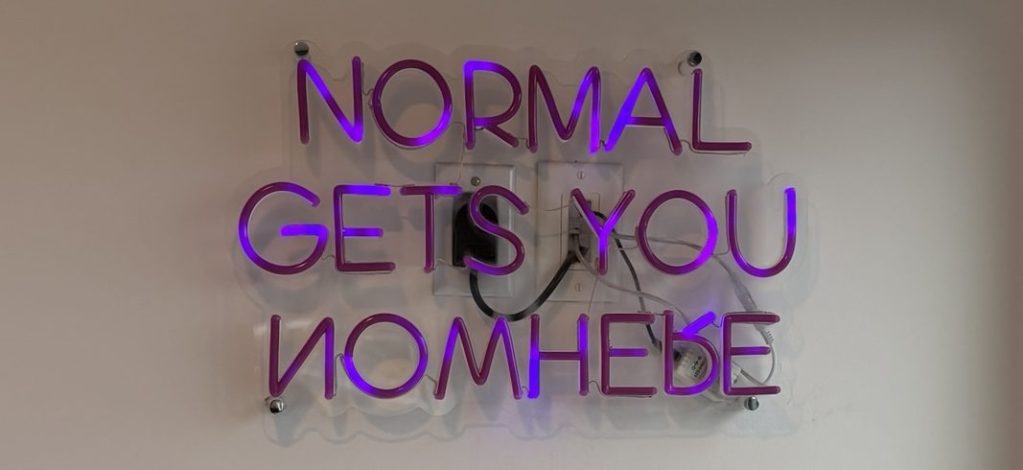
What Do We Want to Become?
Sometimes we know what we don’t want, which helps us understand what we do want.
- I don’t want to be the 21-year-old version of myself who contorted herself to succeed.
- I don’t want to stay quiet when I’m underpaid while outperforming expectations.
- I don’t want to be talked over in boardrooms because someone with a bigger personality believes volume equals competence.
- I don’t want to make myself smaller so someone else can feel bigger.
There are people who recognize competence without chest-beating. Those are increasingly the people I want around me. I’ve learned that if you aren’t driving your own life, you eventually become a passenger in somebody else’s.
Sometimes being a passenger is wonderful. Especially when you’re traveling with a good crew, but you should know when you’ve handed someone else the keys.
Success Looks Different to Me Now
- I still want to make great money.
- I want financial security.
- I want my business to succeed.
- I want to be smart about my future because I understand how quickly circumstances can change.
But money isn’t the whole thing anymore. If I knew with absolute certainty that everything financially would be okay, I know what I would do.
- I’d teach.
- I’d mentor.
- I’d take classes.
- I’d build friendships.
- I’d create.
- I’d love and be loved.
- I’d let more anxiety slide past me without grabbing onto it.
Maybe the challenge is learning how to build a life containing more of those things before someone gives us permission or we expect AI to do it for us.
We’re All on Borrowed Time
I am increasingly aware that nothing is guaranteed.
- Careers change.
- Looks change.
- Friendships change.
- Relationships change.
- Our bodies change.
- Technology changes.
And eventually, we lose people we love or they lose us. Writing that hurts because I know someday my best friend and I won’t both be here. This is someone who has supported me through some of my darkest moments and toasted champagne with me during some of my best ones.
That kind of friendship is priceless. AI can replicate a lot of things. I don’t believe it can replicate shared history.
Maybe We Need a Different Kind of Ambition
For generations, women fought for the opportunities I now have. Women before me were expected to stay quiet. They were dismissed as “just secretaries” when everyone knew they were running half the operation, if not more.
They endured harassment, discrimination and indignities simply to survive professionally. Some paid extraordinary prices so women like me, my friends, our daughters, nieces and cousins could have more choices. I don’t want to waste that gift, but maybe honoring it doesn’t mean climbing every ladder available to us. Maybe it means having the freedom to decide which ladders aren’t worth climbing at all. Instead of climbing a greased corporate ladder, maybe I want to make my own path through the grass.
Take Off the Training Wheels
Building your own business is terrifying sometimes. So is building your life.
There are moments when we all think: WTF am I doing? And then something interesting happens. Our belief in ourselves comes back even stronger. So maybe this next chapter isn’t about knowing exactly where we are going. Maybe it’s about trusting ourselves enough to start riding.
- Take off the training wheels.
- Screw something up.
- Wipe out once or twice.
- Skin your knee.
- Learn.
- Try again.
And while we’re doing it, I want sparkly-ass streamers on my bike. In fact, put playing cards in the spokes and strap a bubble machine to the basket. Cover the thing in colorful lights until I look like the neighborhood lunatic. Who decided adulthood had to become so damn serious? Maybe we’ve spent so much time trying to succeed that we’ve forgotten how to play.
Be the Driver
AI will create extraordinary things, eliminate certain jobs, create entirely new ones and force us to reconsider what being human actually means.
We don’t control all of that. We do have considerably more influence over our lives than we sometimes remember. We can decide what technology gets to replace and what we refuse to outsource. We can decide who gets our time, which relationships deserve investment and what success means.
We can decide whether the ladder we’re climbing is even leaning against a wall we care about reaching. Sometimes we can simply decide to get off the ladder altogether. Make a path through the grass, laugh with your friend and watch the chipmunks. Get the robot massage and push the emergency button if it goes Terminator. Then get back on your ridiculously decorated bike and ride.
Life is changing whether we’re ready or not. We can be passengers in that change. Or we can become the creators and drivers of what comes next.
Leave a Reply